

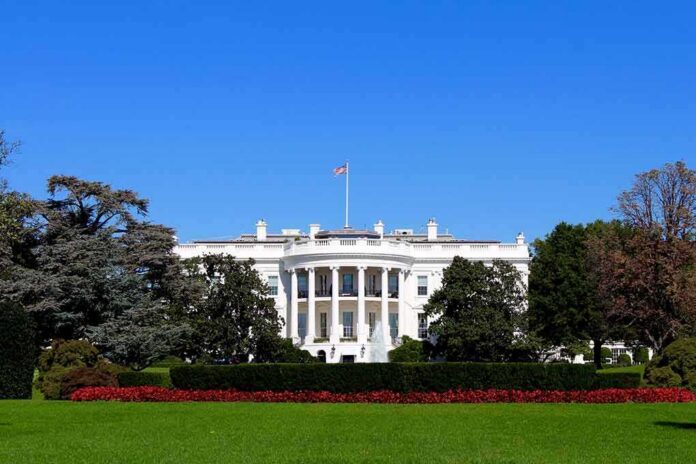
Philadelphia’s top prosecutor said “we’re gonna blow it up” about the White House ballroom, and the fallout shows how a single line can set the whole room on fire.
Story Snapshot
- Larry Krasner said the Trump White House ballroom would be “blown up,” sparking outrage.
- His words came at a public ceremony in Philadelphia with cameras rolling.
- Supporters point to his “official ceremony” framing and taxpayer payback riff as rhetoric, not plans.
- The clash fits a larger pattern where political hyperbole is heard as a literal threat.
What Krasner Said And Where He Said It
Philadelphia District Attorney Larry Krasner spoke at the President’s House commemoration in Old City. During his remarks, he mocked President Trump’s planned White House ballroom and said he wanted a chunk of it “after we all blow it up.” He also used sharp lines about Trump’s character. The exchange came on a public stage, not in private. Local television and online clips captured the phrasing that lit up the debate.
Video posted online shows the same core language. Krasner talked about time passing, smiles later, and a piece of the ballroom on his desk “after we all blow it up.” He set the act in an “official ceremony,” which he linked to paying back taxpayers by selling debris as paperweights. That fuller riff matters. It places the “blow it up” line inside a future, formal, symbolic scene, not an instruction to attack a building today.
Philadelphia DA Larry Krasner is facing backlash after saying he wants to “blow up” the White House ballroom and keep a piece of it as a paperweight on his desk.
The remark is drawing criticism over the rhetoric and its reference to destroying part of the White House.
Photo via… pic.twitter.com/97VWMBRMly
— TalkRadio 77 WABC (@77WABCradio) August 26, 2026
Why Critics Hear A Threat And Supporters Hear Rhetoric
Critics argue that “we’re gonna blow it up” means what it says. They stress the plain words, the target named, and the applause line vibe. To them, this is not policy talk but a violent image aimed at the seat of federal power. Supporters answer that the same sentence includes “official ceremony,” a nod to lawful transfer and renovation, not mayhem. They also cite the “sell the pieces” joke as proof of a political bit, not an operational plan.
American law and media practice draw a line between threats and rhetorical hyperbole. Rhetorical hyperbole uses big, obvious exaggeration to make a point and is often protected speech. Context, timing, and audience shape how people hear it. When a speaker uses future framing and staged ceremony language, many listeners take it as metaphor, even if the words sound rough out of context.
The Facts That Hold Up, And The Line That Crossed A Line For Many
The factual backbone is not in doubt. Krasner said the words about “blow it up.” He tied them to a White House ballroom project linked to President Trump. He spoke in public at a civic event. He cast Trump in harsh moral terms. These points are on the record. The dispute sits in the meaning of “blow it up.” One camp treats it as a call to destroy a federal space. The other treats it as a gleeful, future demolition under new leadership, like tearing down a boondoggle.
Common sense and conservative values point to two guardrails. First, leaders should not flirt with violent imagery about civic sites. Words shape mood. They either cool tempers or heat them up. Second, we should judge speech in full context before calling it a true threat. The tape shows Krasner placing the “blow it up” line inside a ceremonial, delayed, and symbolic frame. That pushes it toward hyperbole rather than a concrete plot, but it also shows poor judgment.
Why This Keeps Happening In Our Politics
Modern political talk runs on punchy images and easy clips. Speakers choose big verbs because small verbs get ignored. Then opponents slice the line from its setup and blast it as literal. Supporters then point to the missing context and cry foul. This loop feeds outrage, engagement, and fundraising. Research on hyperbole in political speech shows how exaggeration grabs attention fast and gives the speaker force, but it also raises the risk of being taken literally.
The wiser path is simple. Keep the moral clarity. Ditch the demolition verbs. Say the ballroom is wasteful, tacky, or unfit for the People’s House. Promise to replace it by the book if voters choose a new course. That draws a bright contrast without hinting at blasts and rubble. Voters deserve blunt talk that builds trust, not showy lines that leave half the country guessing the speaker’s real intent.
Sources:
twitchy.com, nbcphiladelphia.com, youtube.com, facebook.com, dailywire.com
© horizonpost.com 2026. All rights reserved.