

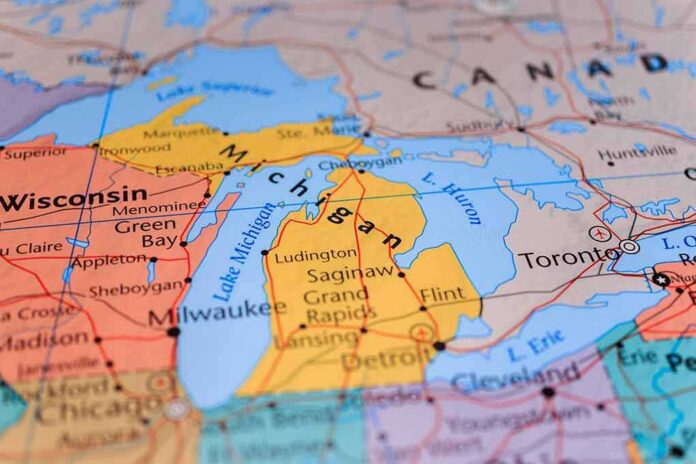
President Trump said he wants to rename Lake Ontario to “Lake America,” and that single line punched right into a tense trade fight with Canada.
Story Snapshot
- Trump floated changing Lake Ontario’s name to “Lake America” during tariff tensions.
- The remark followed failed talks and steep new U.S. tariffs on Canadian goods.
- Renaming a major feature runs through the federal Board on Geographic Names process.
- The message signals leverage and pride during a high-stakes economic clash.
What Trump Said And Why It Landed Like A Thunderclap
Trump posted that the United States is giving “serious consideration” to changing Lake Ontario’s name to Lake America. He tied the line to a break in business with Ontario. News outlets quickly echoed the quote as trade tensions rose. The statement did not arrive in a vacuum. It came as Washington rolled out sharp tariffs and talks with Ottawa fell apart days earlier, raising pressure on both sides to show strength.
The message worked because it was simple, visual, and national. A lake touches identity in a way tariff tables never do. The line also put Ontario’s name on the nose of the story. That flip forces Canada’s leaders to decide whether to swat it away or answer it head on. Either choice keeps the U.S. frame in the spotlight. That is basic negotiation: set the terms, then force the other side to react.
The Real Path To Renaming A Great Lake
Maps do not change by post. Federal names flow through the United States Board on Geographic Names. That body exists to standardize names across all federal use. Petitions, review, and case-by-case decisions are its bread and butter. Congress can also act by law. Agencies then align their charts and products. That is the channel, and it was built to keep maps stable and politics at arm’s length, at least on paper.
That process matters because it shows the gap between a headline and a change on the ground. A social post can start a fight. It cannot finish paperwork. If the White House wants to push it, it can still spark filings, agency reviews, and even a bill. But every step creates time for allies, stakeholders, and border communities to weigh in. That gauntlet filters heat from substance, which is healthy when a Great Lake is in play.
Trade War Backdrop That Raised The Stakes
The tariff fight set the stage. U.S. negotiators and Canada’s team failed to clinch a deal before a deadline. The United States then hit select Canadian goods with fifty percent import taxes. Canada prepared counter-moves. Each side blamed the other for the breakdown. That spiral made small signals feel large. In that climate, a renaming line is not a joke to markets or mayors who live on that shoreline.
US President Donald Trump says the US is “giving serious consideration” to renaming Lake Ontario as “Lake America,” citing strained trade ties with Canada’s Ontario province.
The remark comes as the US-Canada trade war escalates, with Washington imposing 50% tariffs on Canadian… pic.twitter.com/7lGI4iJSQD
— ET NOW (@ETNOWlive) August 25, 2026
American conservative values prize leverage that protects workers at home. If a sharp message helps win fairer terms, many will back the tactic. The test is whether the pressure yields better access and jobs without needless whiplash for cross-border communities. On that score, the policy yardsticks remain plain: end unfair barriers, secure supply chains, and stop letting partners ride free on U.S. market access. Style points matter less than results.
Symbolic Gestures That Move Real Lines
Renaming talk has power because names anchor story and status. Governments have used name changes to honor history, fix slurs, or flag new eras. In the United States, the Board on Geographic Names and state bodies have handled many such shifts after public input. Even when names do not change, the push can reset the debate and remind people who sets the rules on their side of the border. That is why such moves recur in hot disputes.
Canada’s smartest play may be to keep eyes on the math: tariffs, quotas, and rules of origin. That avoids feeding a headline and keeps pressure where it counts. Still, the post already did its job. It drew attention to a core message: the United States will not accept terms it views as lopsided. If Canada wants calm waters, it must help row toward a balanced deal. That is how both shores keep trade and pride intact.
Sources:
townhall.com, trumpstruth.org, abcnews.com, caliber.az, businessinsider.com, georgiaarchives.org
© horizonpost.com 2026. All rights reserved.