
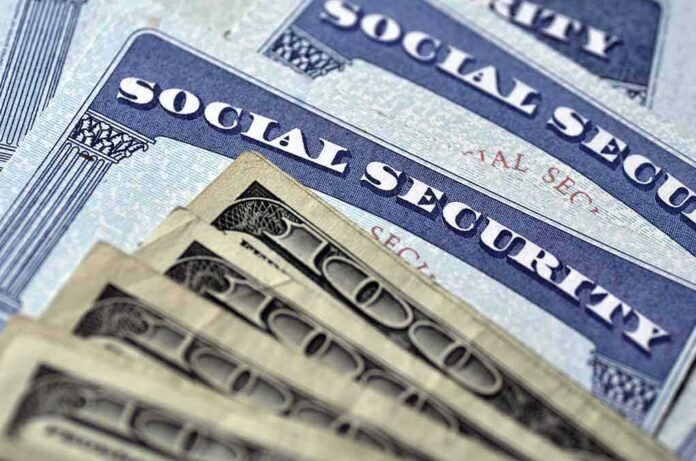
A quiet envelope with a Social Security card now doubles as a starter kit for your child’s first investment account.
Story Snapshot
- Social Security is adding Trump Account info to newborn card mailers through Enumeration at Birth.
- Parents get steps to claim the account, use the app, and manage deposits.
- Eligible children born 2025–2028 may receive a one-time $1,000 Treasury contribution.
- Treasury rules authorize automatic account setup and outline implementation.
Social Security links newborn cards to Trump Accounts
The Social Security Administration began inserting Trump Account details with Social Security cards sent to newborns through the Enumeration at Birth system. The agency timed the change for families who receive the card soon after a hospital birth record is filed. The insert directs parents to visit the official site, download the app, create access, watch for messages from the Department of the Treasury, and manage the child’s account ongoing. The goal is to connect savings to life’s starting line.
The announcement follows months of planning with hospitals and state vital records offices. Social Security said it updated hospital guidance and worked with states to modify the forms used to request a Social Security number at birth. The agency also said future mailers for newborn cards would include Trump Account information as a standard insert. The change makes the on-ramp clear for parents who are juggling paperwork, car seats, and sleepless nights in those first days at home.
What parents are told to do next
The insert lays out simple steps. Parents and guardians sign up using the official website and app. They complete identity checks, claim the child’s account, and choose how to receive alerts. They can make their own contributions or leave the account to grow from the initial setup and any qualifying deposit. The Department of the Treasury handles the account system and will communicate about eligibility and funding once the account is established. Clear directions reduce friction at a high-stress moment.
Eligibility rules matter for the headline figure. Social Security’s notice says children born between January 1, 2025, and December 31, 2028, may qualify for a one-time $1,000 contribution from the Department of the Treasury if other conditions are met. This is not a check in the envelope; it is a potential deposit into the account. That design keeps the benefit tied to the savings vehicle rather than day-to-day spending. It also sets a firm window for birth cohorts that qualify.
Treasury’s authority and automatic setup
The Department of the Treasury issued temporary regulations that define Trump Accounts in law and procedure. The rules describe these as individual retirement-style accounts established under the tax code. They allow Treasury to create an initial account for an eligible child without a guardian’s prior affirmative election, with enrollment beginning around October 1, 2026. Treasury separately announced the launch of the program and the scope of the official app that helps parents manage these accounts. The legal scaffolding supports a nationwide rollout.
Automatic enrollment is not new as a policy tool. Research shared with Congress shows that when programs remove small hurdles, participation jumps. Child savings account programs that auto-enroll families reach far more children than programs that require parents to opt in. That is basic human behavior: when the door is open and the path is short, more people walk through it. The Trump Account insert piggybacks on the one government mailing every newborn family expects to open.
What this means for families and for policy
Parents get a ready-made account at birth, with a possible federal seed. The insert tells them exactly where to go, which reduces guesswork and scams. The Department of the Treasury runs the platform, which keeps the benefit inside a regulated system rather than scattered across private pitches. From a conservative lens, this leans on existing institutions, simplifies access, and invites private saving without forcing it. Families decide whether and how much to add over time.
.@SocialSecurity is informing parents about how to activate their newborn child’s Trump Account and claim the $1,000 contribution from @USTreasury.
Nearly 70 million @TrumpAccounts are now open and tens of millions are already funded!https://t.co/UTuAr7UERB
— Frank Bisignano (@frankjbisignano) October 20, 2026
The program’s promise lives in follow-through. A simple, secure claim process can turn a busy week of newborn chores into a long-term habit. The $1,000 headline will draw attention, but the bigger win is steady compounding over years. The insert meets parents where they are, at the mailbox, and connects them to an account built to last. If families keep the ball rolling with small, regular deposits, the envelope that welcomed a child home could also help fund that child’s future.
Sources:
facebook.com, ssa.gov, home.treasury.gov, socialsecurityreport.org, congress.gov
© horizonpost.com 2026. All rights reserved.