
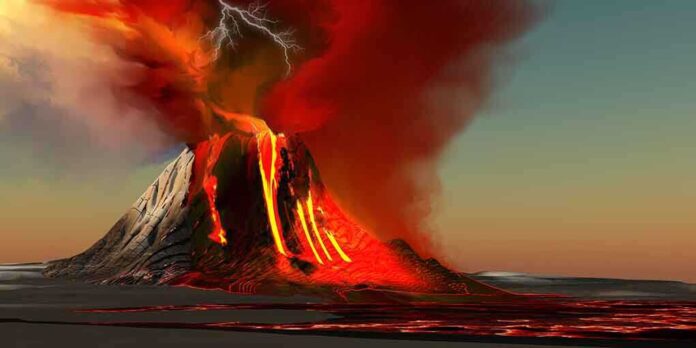
A dormant volcano has reawakened after 700,000 years, raising concerns about the preparedness of nearby communities.
Story Snapshot
- A volcano dormant for over 700,000 years has shown renewed activity.
- Increased seismic activity and gas emissions have been detected.
- Communities near the volcano are facing emergency preparedness challenges.
- Scientific and economic concerns arise due to the volcano’s awakening.
Unexpected Awakening of a Dormant Volcano
A volcano, which last erupted over 700,000 years ago in Iran, has recently shown signs of activity, capturing the attention of scientists and local authorities. This unprecedented event has prompted increased monitoring and emergency preparedness efforts in nearby communities. The reactivation has led to seismic disturbances, gas emissions, and minor eruptions, raising questions about the potential hazards and the effectiveness of current risk assessment models.
Local governments and emergency services are on high alert, preparing evacuation plans and public safety guidelines. The lack of recent volcanic activity in the area means many residents are unprepared for such an event, making effective communication and planning essential. The scientific community is working to understand the mechanisms behind the volcano’s reactivation and to forecast potential future eruptions.
Implications for Nearby Communities
The reawakening of the volcano poses significant challenges for local economies, which are heavily reliant on agriculture and tourism. The potential for damage to crops, infrastructure, and air quality could result in immediate economic losses. In the long term, there is a risk of landscape alteration and prolonged displacement of communities, affecting livelihoods, especially in agriculture and tourism sectors.
Emergency response plans are being tested as authorities strive to protect citizens and infrastructure. The unpredictability of the situation is causing anxiety among residents and business owners, who are concerned about safety and economic stability. Political pressure is mounting on local and national governments to manage the crisis effectively and equitably.
Scientific and Economic Concerns
Experts emphasize the rarity of such long-dormant volcanoes reawakening and highlight the need for robust monitoring and flexible response strategies. The event underscores potential gaps in current volcanic hazard models and presents an opportunity to advance forecasting techniques. Economic analysts warn of cascading effects on local and global markets if the eruption disrupts major industries or trade routes.
After Over 700,000 Years Without Activity, This Volcano Has Awakened – BGR https://t.co/2DP26R4Dkx
— MARTIN (@MARTIN91559117) November 23, 2025
Volcanologists see the scientific value in studying this event to improve understanding of volcanic dormancy and reactivation mechanisms. Disaster resilience researchers stress the importance of community preparedness and adaptive recovery planning. As monitoring continues, authorities and scientists aim to refine emergency plans and improve public communication to mitigate the impact of potential eruptions.
Sources:
Fiveable: Economic and Social Consequences of Volcanic Activity
Copernicus/NHESS: Social sensing a volcanic eruption (Kīlauea case study)
Lloyd’s: Economic impact modeling of volcanic eruptions