

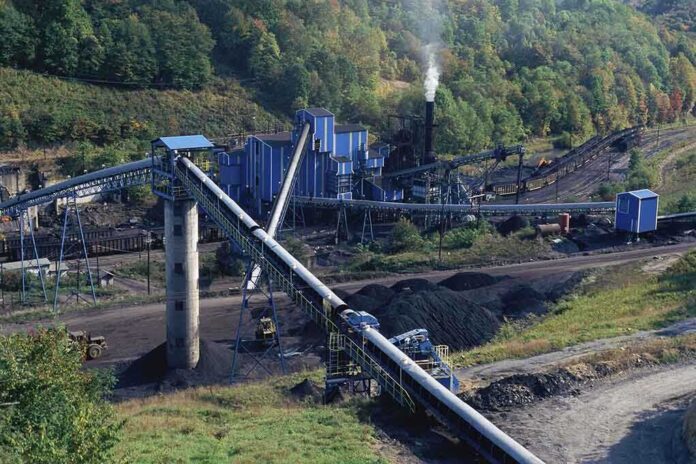
America’s future may be slipping away as critical minerals are discarded in mining tailings.
Story Overview
- The U.S. mines all but two critical minerals needed, yet most are wasted as tailings.
- Recovery technologies and supportive policies are the main hurdles.
- Domestic supply could drastically reduce import dependence.
- Elizabeth Holley and the USGS emphasize the strategic need for recovery.
The Issue of Mineral Waste
Recent analysis reveals the U.S. mines nearly all critical minerals necessary for energy, defense, and technology sectors. However, these minerals, such as cobalt, lithium, and rare earth elements, are being discarded as mine tailings. The core issue is not the geological scarcity but the absence of economically viable recovery processes and policy frameworks. This oversight implies a significant waste of resources that could otherwise secure the nation’s supply chains and reduce dependence on foreign imports, particularly from countries like China.
Research led by Elizabeth Holley from the Colorado School of Mines highlights the potential to recover these minerals from existing operations focused on metals like gold and zinc. The study is a wake-up call for policymakers to address the waste rather than the scarcity of these resources. By investing in recovery technologies and creating supportive policies, the U.S. could enhance its supply chain resilience and secure its strategic future.
Current Efforts and Challenges
In September 2025, the U.S. Geological Survey (USGS) released a draft of the 2025 Critical Minerals List, emphasizing the importance of securing supply chains. Despite the presence of these minerals in mine tailings, recovery remains limited due to technical and economic barriers. Federal and academic institutions are conducting research into recovery technologies and policy incentives. However, the transition from pilot projects to commercial-scale operations is slow, hindering the potential benefits of resource recovery.
The Department of Energy’s efforts to fund demonstration projects showcase the potential for economic growth and national security. Yet, the mining industry remains cautious, considering the added costs and regulatory complexities. Policymakers are urged to provide clear incentives and address the broader strategic implications to facilitate recovery efforts.
Implications for Industries and National Security
The failure to recover these minerals poses both short-term and long-term risks. Short-term, the country continues to waste valuable resources and depend on imports. Long-term, without a shift in policy and technology, the U.S. could face strategic vulnerabilities. Successful recovery would not only reduce environmental risks associated with tailings storage but also provide economic benefits, including new revenue streams and job creation in mining and processing industries.
Industry experts stress the importance of collaboration between research, industry, and policymakers. The recovery of even modest percentages of critical minerals could meet domestic demands, reducing leverage of foreign suppliers and bolstering national security. With the right investments and policies, the U.S. can harness its mineral resources to power its future.
Sources:
America Already Mines All the Critical Minerals It Needs—But Most Are Being Wasted as Mine Tailings
US Already Has the Critical Minerals It Needs, They’re Being Thrown Away, New Analysis Shows
2025 Critical Minerals List Released by USGS
Department of Interior Releases Draft 2025 List of Critical Minerals