

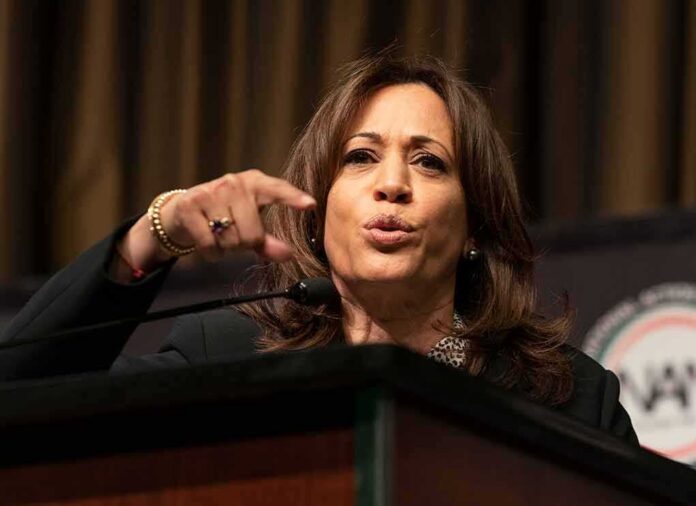
Kamala Harris will join Abdul El-Sayed in Michigan for a Black maternal health roundtable, signaling where Democrats plan to fight and how they hope to win.
Story Snapshot
- Harris and El-Sayed will appear together at a Michigan roundtable on Black maternal health.
- El-Sayed’s team set Tuesday as the date and named the topic and format.
- Campaign spokespeople on both sides confirmed the joint event and purpose.
- The appearance is framed as their first joint outing since her endorsement.
A campaign stop with clear goals and a defined topic
The Associated Press reported that Kamala Harris plans to campaign with Democratic Senate nominee Abdul El-Sayed in Michigan and attend a roundtable on Black maternal health on Tuesday. El-Sayed’s campaign set the day, named the topic, and described the event as a conversation with Black women and providers. The format is a roundtable, not a rally. This kind of setting suggests listening and policy talk, not stump speech theatrics. That choice matters in a tight race where trust is currency.
Harris spokesperson Eduardo Negrón confirmed the appearance and said she will highlight Black maternal health with El-Sayed. El-Sayed’s spokesperson said he looks forward to hearing directly from Black women and health providers, and tied the event to lowering health care costs. Together, the statements show a coordinated plan: connect with a key voter bloc, show policy seriousness, and frame the conversation around health outcomes and household budgets. This is message discipline paired with a local health equity lens.
Why Black maternal health, and why now
El-Sayed’s team framed the issue with a stark Michigan claim: Black women are twice as likely to die from pregnancy-related causes compared to white women, with many deaths preventable. Medical and policy literature treats this crisis as a structural problem that goes beyond hospitals and into housing, transport, and community support. Roundtables have become a common forum to surface those links and to show accountability across sectors, from clinics to lawmakers and advocates. The topic also aligns with family-first values that cross party lines.
Campaigns use this issue because the stakes are real and easy to grasp. A mother survives birth or does not. A baby starts life with a healthy mother or without one. Policymakers can point to steps like better prenatal care, stronger data tracking, and support for doulas. Critics often ask where the dollars go and how to measure progress. Those are fair questions that any serious roundtable should face head-on, with clear metrics and timelines. Voters respect candor and results over slogans.
The political read without the fog machine
Reporters framed this as the first joint public appearance since Harris endorsed El-Sayed after his primary win, a basic but notable marker in party unity efforts. Some outlets cast El-Sayed with ideological labels and pulled in other controversies, but the announced event stands on its own facts: date, format, topic, and mutual confirmation from campaign spokespeople. The venue and access details were not in early reports, a common gap for pre-event notices. That missing detail does not change the core plan laid out by both sides.
From a conservative common-sense lens, two tests apply. First, does the event respect taxpayers and avoid empty theater? This is campaign travel, so voters should demand specifics on cost, policy aims, and measurable outcomes. Second, does the message match real-life tradeoffs? Talking about maternal health should include safety, affordability, and strong families. If the conversation stays practical—more healthy moms, fewer preventable deaths, fewer surprise bills—it can earn broader credit. If it drifts into buzzwords, it will not.
What to watch for on Tuesday
Watch the guest list and the follow-ups. If Black mothers, nurses, midwives, and hospital leaders speak, the roundtable may surface fixable gaps like late prenatal entries or postpartum checkups. If the campaigns release a short action list with deadlines, the event moves from talk to testable steps. Expect both sides to court local media, faith leaders, and neighborhood groups who can translate any pledges into sign-ups, rides to clinics, or help with insurance forms. That is how policy talk becomes life change.
Kamala Harris to Campaign with Progressive Democrat Abdul El-Sayed in Competitive Michigan Senate Race https://t.co/XZqUNWep74
— George Tabak (@GeorgeT85273) September 19, 2026
Also watch how the campaigns handle data. If they cite state or federal numbers on mortality and severe complications, they should link those to simple yardsticks: more timely prenatal visits, lower readmissions, and better mental health screens. Voters do not need jargon. They need proof that programs reach moms before crises hit. Tuesday’s roundtable offers a stage to set that bar. After the cameras leave, results will decide whether the message sticks or fades.
Sources:
politico.com, thehill.com, wmal.com, breitbart.com, apnews.com, washingtonexaminer.com
© horizonpost.com 2026. All rights reserved.