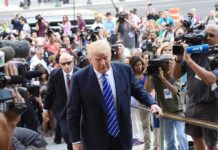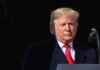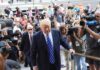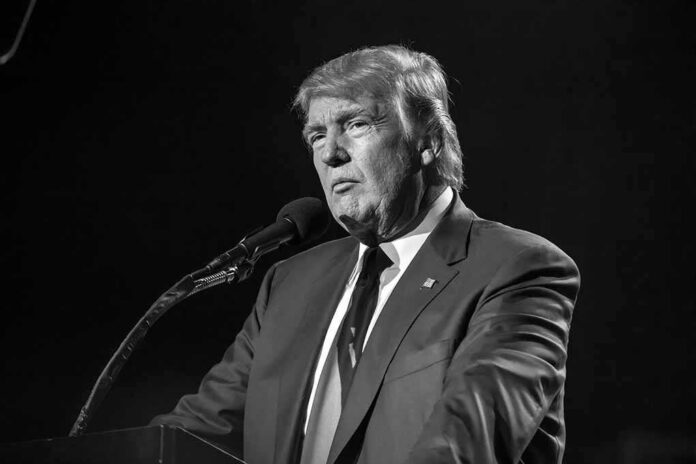
President Trump told a Nebraska crowd that Iran could “take out” Los Angeles and San Diego, calling it a small price to pay for keeping the country safe.
Quick Take
- Trump made the remarks Monday at a campaign rally in Grand Island, Nebraska, while defending the economic costs of the Iran war.
- He said rising gas and fertilizer prices were “artificial” and worth it, then suggested Iran could strike Los Angeles or San Diego.
- California Governor Gavin Newsom, Los Angeles Mayor Karen Bass, and San Diego Mayor Todd Gloria all condemned the comments.
- The White House says Trump was warning about the danger of a nuclear-armed Iran, not inviting an attack.
What Trump Actually Said At The Rally
Trump was talking about fuel and fertilizer prices tied to the Iran war when he pivoted to a blunt comparison. “It’s a small price to pay for keeping the world safe, keeping our country safe,” he said, before adding that Iran “can take out a city” and naming Los Angeles and San Diego directly. He repeated the line “this is a very small price to pay” moments later, according to multiple outlets covering the speech.
The phrasing left plenty of room for argument. Was Trump describing a real threat Iran poses if it builds a nuclear weapon, or was he casually accepting the destruction of two major American cities as a budget line item? Supporters say it’s obviously the former. Critics in California insist it sounded like the latter, and they wasted no time saying so.
California Officials Fire Back Hard
San Diego Mayor Todd Gloria posted that his city “is not collateral damage,” adding, “We are not expendable. And we are never a ‘small price to pay'”. Los Angeles Mayor Karen Bass called the remarks dangerous, saying they could “compromise our safety.” Governor Newsom went further, branding the president “deranged and dangerous” and accusing him of telling foreign enemies they could strike American soil.
These are elected Democrats in a blue state that has clashed with Trump repeatedly this year, so some political theater is expected. But the speed and unity of the response shows how easily wartime talk about acceptable losses can be twisted into a weapon against the speaker, regardless of intent.
The White House Pushes A Different Reading
Trump’s Rapid Response Team said the comments were meant as “a warning about the threat Tehran could pose if it develops a nuclear weapon,” not permission for an attack. White House communications staff echoed that defense, saying Trump was describing what American cities would face if a nuclear Iran went unchecked, not endorsing an attack on them.
That explanation tracks with how Trump has talked about Iran’s nuclear ambitions for years: as an existential threat that justifies tough action now rather than regret later. Framed that way, the city-destruction line reads less like a shrug and more like a dramatic, if reckless, sales pitch for his Iran policy.
Why Leaders Use This Kind Of Sacrifice Talk
Trump isn’t the first commander in chief to argue that civilian pain is the cost of security. Scholars who study wartime rhetoric note presidents have long invoked sacrifice to make continuing a conflict feel like a moral duty instead of a debatable choice. The tactic works because it’s hard to argue against safety without sounding like you don’t care about it.
The risk is that blunt, off-the-cuff language about American cities being destroyed doesn’t land as calculated deterrence messaging. It lands as a soundbite, stripped of context, ready to be replayed by critics for weeks. Whether Trump meant a warning or a worst-case scenario, the words themselves gave opponents an opening they were never going to pass up.
At a campaign rally in Nebraska, Donald Trump said Iran could “take out” Los Angeles or San Diego and called that “a very small price to pay” for keeping the country safe. The remark came while he was discussing higher prices caused by the war, but he explicitly named two major… pic.twitter.com/teLs68vquL
— DARKCOM (@DARKCOMBUZZ) October 6, 2026
Voters will ultimately decide whether this was a clumsy but honest description of nuclear stakes or a genuine lapse in judgment from the nation’s highest office. Either way, the exchange shows how fast a rally applause line about gas prices can turn into a national argument about war, safety, and who gets to call a city expendable.
Sources:
reuters.com, wpde.com, goodmorningamerica.com, thehill.com, npr.org, journals.rcsi.science
© horizonpost.com 2026. All rights reserved.