

President Trump promised every adult citizen a $5,000 “dividend” if Republicans control both the House and Senate after the midterms.
Story Snapshot
- Trump pledged $5,000 per adult at the Republican midterm convention in Dallas.
- The payment depends on Republicans winning both chambers of Congress.
- Coverage across major outlets confirms the on-record promise and timing.
- Reporters estimate a cost near $1.35 trillion based on adult population math.
What Trump Promised, When, and Under What Conditions
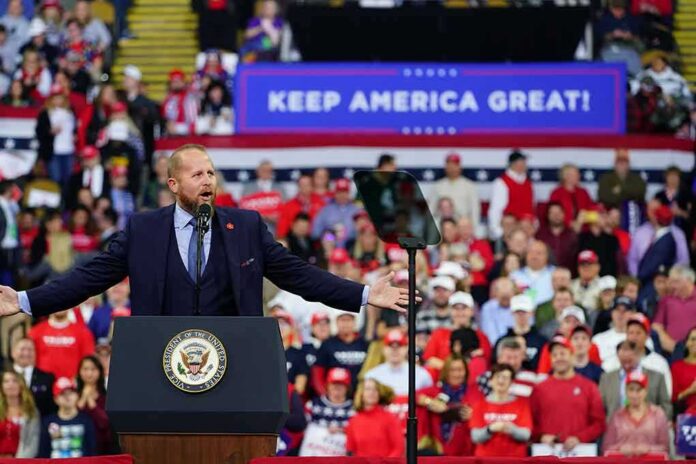
Trump told the Republican midterm convention in Dallas that he would issue a $5,000 dividend to every adult citizen if Republicans win both the House and the Senate. He framed it as a reward for economic strength and a direct benefit to Americans. The statement came Sept. 9-10, 2026, and was reported live and in follow-ups by multiple outlets that quoted the pledge on the record. He tied the payout clearly to a full Republican sweep of Congress.
He also called the proposal a “dividend,” likening it to a company distribution. He added a domestic-use condition, saying the money must be spent in the United States. That framing suggests a goal beyond relief checks: push spending into American businesses and workers. Several outlets captured this language about a company-style payout and the spend-in-America rule during their live coverage of the Dallas event.
The Scale: Big, Simple Math That Dominates the Debate
Back-of-the-envelope math sets the size of the plan. With about 270 million adults, $5,000 each means around $1.35 trillion if everyone qualifies. That estimate, reported alongside the pledge, quickly became the shorthand for the idea’s fiscal scope. The number is easy to repeat because it sits on a single assumption. It also sets the stage for every follow-up question on funding, timing, and eligibility.
The estimate is not a formal budget score. It is arithmetic based on the adult headcount. That is enough to convey scale, but it does not explain the mechanism. Would the money flow as a tax rebate, a tariff rebate, or a new program? Would it come in one payment or installments? Those details matter for markets, inflation, and debt. None were specified in the reports from Dallas or in immediate coverage after the speech.
Eligibility, Means Testing, and the “Spend It Here” Rule
Trump’s Dallas line said every adult citizen. Later remarks from Vice President JD Vance pointed to a possible cap that would exclude wealthy Americans. That creates an open design choice: universal or targeted. A narrow plan cuts cost and can blunt the charge of giveaways to high earners. A universal plan is simpler to run and feels fair to many voters. The reports present this as an active discussion, not a settled design.
President Donald Trump proposed a $5,000 “Trump Dividend” for every American adult if Republicans retain control of Congress in November. The proposal could cost more than $1 trillion and would require congressional approval. Trump made the announcement at the Republican midterm… pic.twitter.com/EUdyIL6kyz
— Houston Chronicle (@HoustonChron) September 10, 2026
The domestic-spending condition aims to boost local demand. It reads like a store-credit idea for the national economy. But it raises questions. How does the government verify a dollar was spent in the United States? What counts as “spent” for online buys, airline tickets, or services? Over what window? The Dallas pledge did not include an enforcement plan. Outlets quoted the condition but did not cite any operational detail tied to it.
How This Fits American Politics and Law
Universal-cash promises are a familiar election move. Voters understand them fast. The policy guts come later, usually after committees and agencies get involved. American law draws a line between public policy promises and direct vote buying. Public, general promises of future benefits sit on protected political speech. Private or conditioned payments for votes remain illegal. That is why these pledges are common even if the specifics take time to emerge.
This proposal also sits inside a classic conservative test: can a simple promise support growth without building a new permanent program? The answer depends on design. A one-time rebate tied to American spending echoes supply-side instincts if funded by cuts or repatriated revenue. A large deficit-financed outlay invites pushback on inflation and debt. Voters over 40 have seen both stories play out. The plan’s fate will ride on whether the details match its bold pitch.
What To Watch Next
Watch for three signals. First, a formal vehicle from congressional leaders that shows whether this is a tax code change, a rebate, or a direct payment. Second, a cost and inflation readout from the Congressional Budget Office or the Treasury that tests the $1.35 trillion math. Third, an eligibility sheet that resolves whether high earners are in or out. Those documents will turn a headline into policy, or confirm it as a campaign promise without a path.
Until then, the headline stands: $5,000 per adult, if Republicans hold both chambers. The Dallas line was simple enough to repeat and big enough to stick. The next chapter is not about the mic-drop moment. It is about whether the mechanics can carry the weight of the message — and whether voters want a dividend that must be spent at home, on Main Street, with their name on it.
Sources:
youtube.com, npr.org, reuters.com, nytimes.com, wtop.com, en.sedaily.com, usatoday.com
© horizonpost.com 2026. All rights reserved.